How would you change health care?
This is a big question, and could easily form the subject of several books. But since I don’t have the time to do this, I am only going to highlight a couple points and keep the discussion brief, and welcome input from others.
The first issue when it comes to health is one of personal responsibility. None of us are born with an instruction manual, and so it is very important to provide people with a model of health and personal health care that is easy to understand and practice, including both diet and lifestyle. I believe that medical science is too complex a model – too liable to shift and change opinions – to be a sustainable model for health care. You should not need to go to school and become a doctor to understand how your body works. Thus, the first task I believe is to provide people with a simple model that accurately represents effective health practices that work. Fortunately we have many examples of traditional health care models that do exactly that, including Ayurveda, TCM, Unani and other traditional systems of health care. I think researchers should spend more time investigating these models, as a way of leveraging the knowledge we already have.
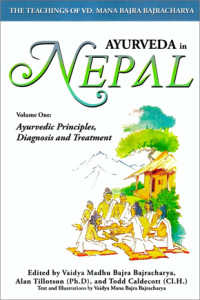
In many traditional societies, health care wasn’t a commodity to be bought and sold, like it is now. Recently, I just finished working on a new book written by the late Vaidya Mana Bajra Bajracharya called Ayurveda in Nepal. It was over 800 years ago that the patriarch of the family took up the consecration of ‘bajracharya’ (in Sanskrit, ‘vajracharya’), and since then, this family has carried forward the tradition of hereditary Buddhist priests and Ayurvedic physicians. As part of the family’s commitment, they have provided free health care to the public since this time, relying upon donations from generous benefactors. The quality of health care wasn’t dependent upon the wealth of the patient because the physicians had no incentive to prefer one patient over another. Thus, another way we can improve health care is to make it freely available to all. But while I do argue for socialized medicine, the infrastructure costs including technology and physician’s salaries are way out of line. I believe that much of this cost could be reduced if we emphasized personal responsibility, and then provided preventative strategies such as free harm-reduction, cooperative/communal home care for elders, and subsidized maternity/paternity leave. At one time in North America, there wasn’t a large gap between the salaries of doctors and their patients, but over the decades this gap has grown steadily wider. Many people enter into the medical profession not from a sense of altruism but as a way to make money and solidify social status. But this is entirely the wrong reason to get into health care, and it is one of the base reasons why our health care system is unsustainable. A profit-driven health care model is inherently unethical. Perhaps we could resolve this issue is medical training was free, and was tied to a commitment to serve the community. With no student loans, doctors might find it easier get out of the business mentality that runs counter to the needs of their patients.
Another way I would change health care is to leverage the potential of the community for support. Any person with a new diagnosis should be directed to government-funded social support groups. These groups would be made up of survivors and their families, who would work collectively to educate and support each other, inviting experts and other clinicians that could provide them with a cornucopia of tools and strategies. The worse thing about getting a medical diagnosis is the sense of isolation and hopeless that it can engender. Actively engaging the energy of the community is a good way to overcome this sense of inertia, and can help facilitate a greater sense of personal responsibility. Very often the best support doesn’t come from a clinician, but from other people that have had success treating their own health issues. Successful patients and survivors need to be given a more active role in the health care delivery system. The superiority of the mentorship model is the reason I founded the mentorship program at the Dogwood School of Botanical Medicine.
Another way I would change the health care system is to get rid of the centralized institutions such as big hospitals that are not only costly to run, but more often than not, actually end up making patients sicker. For example, the CDC reports that over 99,000 people die each year in the US from hospital acquired infection. And this doesn’t even account for the effect of trying to recuperate from an illness in a building filled with thousands of other sick people, staffed by doctors, nurses and staff who are often stressed out and exhausted, while eating from an institutional menu that often doesn’t even meet basic nutritional requirements. Whoa! How can we expect people to get better in such a dysfunctional, unhealthy environment? While there is clearly a need for centralized, acute care facilities, patients should be referred as soon as possible to decentralized clinics and small hospitals. Not only would they have more flexibility in meeting the individual needs of the patient, but they could easily incorporate additional elements such as herb and vegetable gardens, domesticated animals and live music, all of which have been shown to promote healing and good health. If we expect a person to get better, we should create an environment that facilitates that. The hospital itself should be a place of healing, not just crisis management.
These are only a few ideas, and I have many more. But I am interested to hear what you think. How would you change health care for the better?